A sectional is a larger commitment than a single sofa, both in cost and in the space it occupies, so buyers tend to research configuration and fit before anything else. Anabei builds its sectionals as a modular system, where individual seats and corner sections connect to form the shape a room calls for. Readers comparing Anabei sectional reviews generally want to understand how the pieces fit together, how the layout can change over time, and whether the washable design holds up across a piece this size.
How Anabei Approaches Sectional Design
The brand is a direct-to-consumer furniture company operating under CABA Design, a parent organization with experience in design, manufacturing, and supply chain operations. Selling directly to customers, rather than through showrooms, removes the markup that traditional furniture channels add and supports shorter lead times on larger orders. The collection starts at $699.
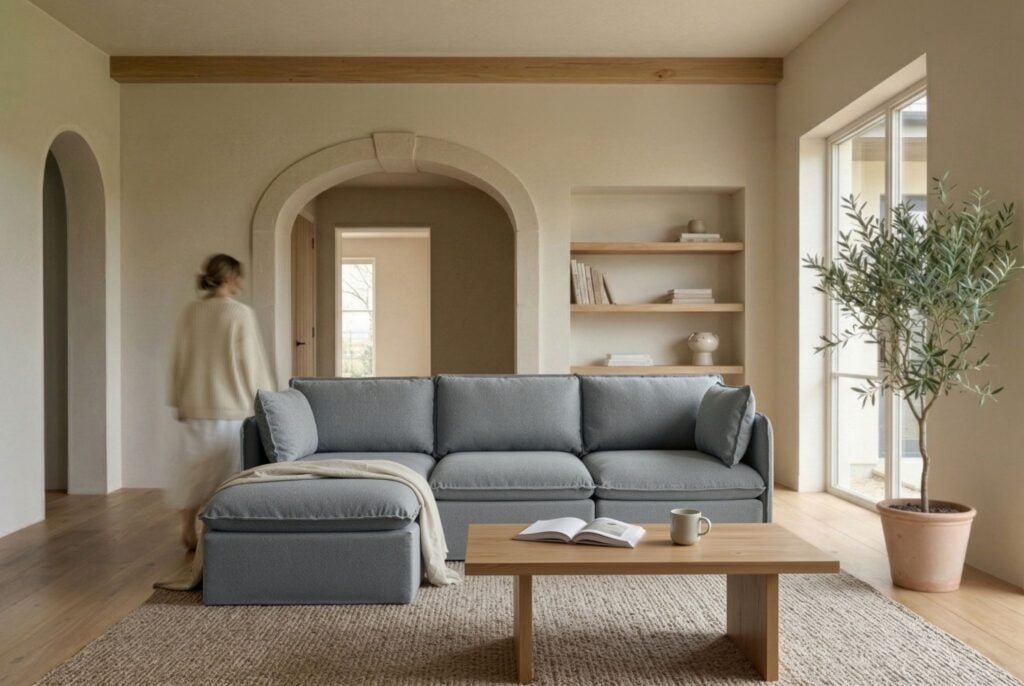
For shoppers comparing Anabei sectional reviews, a sectional in the lineup is assembled from standardized modules: seats, corners, and end pieces that link together on a powder-coated steel frame. Each module carries removable, machine-washable covers and the same performance fabric used across the line, so a large piece keeps the same cleaning and durability characteristics as a smaller one.
Choosing and Changing a Configuration
The defining advantage of an Anabei modular sectional is that the layout is not fixed. An L-shape can become a U-shape, a chaise can move from one end to the other, and modules can be added or removed as a household grows or moves to a new space.
This directly addresses one of the most common frustrations in sectional buying, where a piece sized for one room no longer fits the next. Rather than replacing the whole sectional, an owner can reconfigure the existing modules, which reframes the purchase as a long-term arrangement rather than a single fixed layout.
Fitting a Sectional to a Room
Sizing is the question that dominates sectional research, since a piece that is too large overwhelms a room and one that is too small looks lost in it. A modular system lets buyers match the seat count and footprint to the actual dimensions of a space rather than choosing from a few preset sizes.
Because the sections are standardized, planning a layout becomes a matter of arranging known units. That predictability helps buyers visualize how a sectional will sit against walls, around a coffee table, or facing a television before the piece arrives, while the company’s risk-free return policy provides additional flexibility if a configuration ultimately proves to be the wrong fit
It also simplifies the decision for awkward or open-plan spaces, where a fixed-size sectional often forces a compromise. Standardized modules can be combined to follow the shape of a room rather than fight it, which is part of why layout flexibility appears so often in sectional research.
Washability Across a Larger Piece
A sectional has more surface area to keep clean, which makes washability more relevant rather than less. The covers on each module are removable and machine washable, so a stain on one seat can be cleaned without involving the rest of the piece.
The company presents Anabei’s washable sectional covers as a way to maintain a large furniture purchase over time. A single soiled section can be washed and returned while the sectional stays in use, and a worn or dated cover can be replaced module by module rather than all at once.
Frame, Fabric, and Daily Use
Beneath the covers of the Anabei sectional, the powder-coated steel frame carries the weight of a piece that often seats several people at once. Powder coating resists chipping and corrosion, and the steel structure is designed to hold its shape across connected modules during regular use.
The performance fabric is engineered to resist liquids, stains, and abrasion, with pet-friendly options for households where hair and claw wear are concerns. Combined with configurable modular seating, that fabric lets a sectional handle the heavy, shared use that large family rooms tend to see. Anabei also offers multiple comfort options, allowing households to choose the feel that best matches how they use the space.
What Sectional Reviews Tend to Cover
Across sectional research, the recurring questions involve fit, comfort, assembly, and how the piece holds up under shared daily use. The modular, washable design speaks to several of these at once, since configuration is adjustable and cleaning is a routine task rather than a specialized one.
A complete view of ownership includes delivery of multiple modules, in-home assembly, periodic washing of covers, and occasional reconfiguration as needs change. That context answers more of what sectional shoppers are searching for than a single rating can, and it gives prospective owners a realistic sense of living with a large, connected piece.
About Anabei
Anabei is a direct-to-consumer furniture brand operating under parent company CABA Design. The company specializes in machine-washable, modular sofa and sectional systems built on powder-coated steel frames and performance upholstery designed for households with children and pets. With CABA Design’s background in design and manufacturing behind it, the brand focuses on seating engineered for everyday durability and long-term flexibility. More information about Anabei modular sectionals is available through the company’s direct-to-consumer